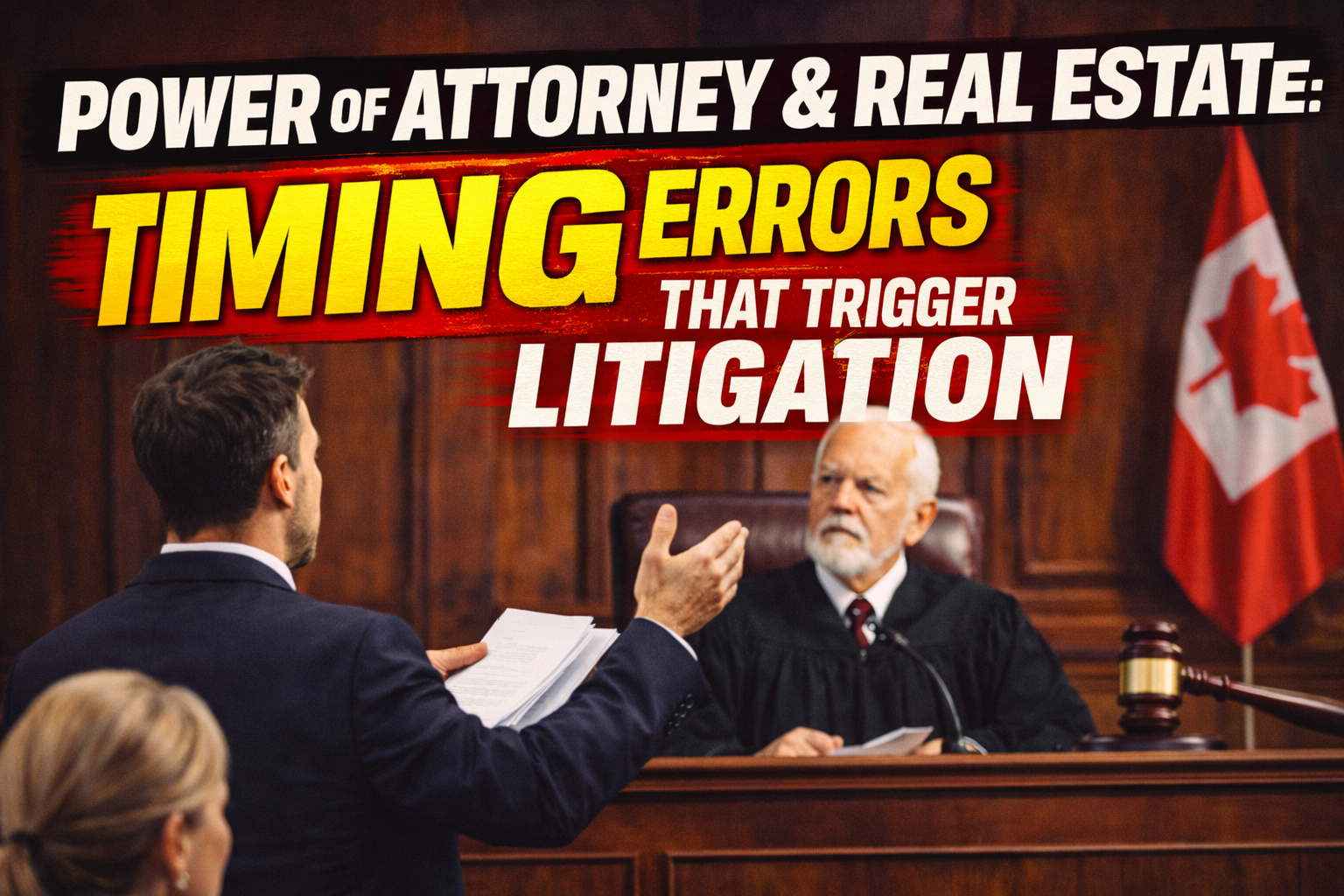
Holding a Power of Attorney (POA) is often described as a position of trust. In reality, it is also a position of legal exposure — especially when real estate decisions are made at the wrong time.Many people assume that once a Power of Attorney is in place, authority is clear and decisions are protected. Unfortunately, that assumption is one of the most common misunderstandings families have. A POA grants authority, but it does not guarantee immunity. Timing, process, and documentation matter just as much as the document itself.In senior housing transitions, real estate decisions made too late are among the most common triggers for family disputes and litigation involving POAs.
Kevin LynchSenior Housing Transition AdvisorRemax Crest Realty
Why Real Estate Decisions Under POA Are So Sensitive
Real estate is often the largest asset in an estate. It is also the most visible and emotionally charged. When a POA is involved, any decision related to the home is scrutinized through multiple lenses:- Financial fairness
- Intentions of the decision-maker
- Impact on beneficiaries
- Alignment with the senior’s wishes
Authority Is Not the Same as Protection
A Power of Attorney provides legal authority to act on someone’s behalf. What it does not provide is automatic protection from challenge.Courts and beneficiaries typically ask:- Was the decision necessary at that time?
- Was it reasonable given the circumstances?
- Was the process transparent?
- Were alternatives considered?
How Timing Turns Neutral Decisions Into Suspect Ones
The same decision can be viewed very differently depending on when it is made.A home sale completed:- While the senior still has capacity
- With documented input from the senior
- Before urgent care needs arise
- After capacity is in question
- During a care crisis
- Amid family disagreement
The Fiduciary Standard: Reasonableness at the Time
POAs are fiduciaries. That means they are legally obligated to act:- In the best interest of the grantor
- With care, diligence, and honesty
- Without self-interest
- Fewer options were available
- Pressure may have influenced judgment
- Documentation is often incomplete
Common Timing Errors That Trigger Challenges
Several patterns appear repeatedly in disputes involving POAs and real estate:1. Waiting Until Capacity Is Questioned
Once a senior’s capacity is in doubt, any major transaction becomes vulnerable to challenge. Even if the POA is valid, beneficiaries may argue that the timing was inappropriate or that the senior’s wishes were unclear.2. Selling During a Care Crisis
When a sudden health event forces a rapid transition to assisted living or long-term care, selling the home under pressure can look reactive rather than strategic.3. Acting Without Family Alignment
While POAs are not required to seek family approval, lack of communication often fuels suspicion. Silence creates space for assumptions.4. Poor Documentation of Decision Rationale
Late-stage decisions are often made quickly. Without clear documentation explaining why the sale was necessary at that time, the POA is left exposed.The Emotional Layer That Complicates Everything
POAs are often adult children who are already carrying emotional weight:- Caregiving responsibilities
- Family dynamics
- Grief and anticipatory loss
Why Early Decisions Protect POAs
Making real estate decisions earlier in the transition offers significant protection for POAs.Early decisions:- Allow the senior to participate
- Reduce urgency-driven mistakes
- Enable broader consultation
- Improve documentation quality
Transparency Is a Shield, Not a Risk
One common fear among POAs is that involving others will create conflict. In reality, secrecy is far more likely to trigger disputes.Transparent processes:- Build trust
- Reduce suspicion
- Clarify intent
- Create shared understanding
The Role of Documentation
Documentation is the POA’s strongest protection.Effective documentation includes:- Notes on the senior’s wishes
- Explanation of timing decisions
- Records of professional consultations
- Clear rationale for selling or delaying
When Delay Becomes a Liability
Delaying a sale is often framed as caution. Legally, it can become a liability if it exposes the senior or estate to:- Financial loss
- Increased care costs
- Missed planning opportunities
What Courts Tend to Look For
While each case is unique, disputes involving POAs and real estate often hinge on:- Timing of the decision
- Capacity at the time
- Evidence of intent
- Reasonableness of alternatives
Reframing the POA’s Role
Being a POA is not about waiting until action is unavoidable. It is about anticipating risk and preserving options.The most effective POAs:- Plan before crisis
- Address real estate proactively
- Seek clarity rather than perfection
- Act while defensibility is strongest
Final Thought
A Power of Attorney is not a shield against scrutiny. It is a responsibility that demands foresight.Real estate decisions made too late can turn well-meaning POAs into legal targets. Decisions made earlier — calmly, transparently, and with documented reasoning — protect everyone involved.In senior housing transitions, timing is not just a practical concern. It is the difference between stewardship and suspicion.Kevin LynchSenior Housing Transition AdvisorRemax Crest Realty